Door Access Control Dubai — Secure Office Entry
Door access control Dubai businesses use should secure entry without obstructing safe exit. We assess the door, users and site requirements together.
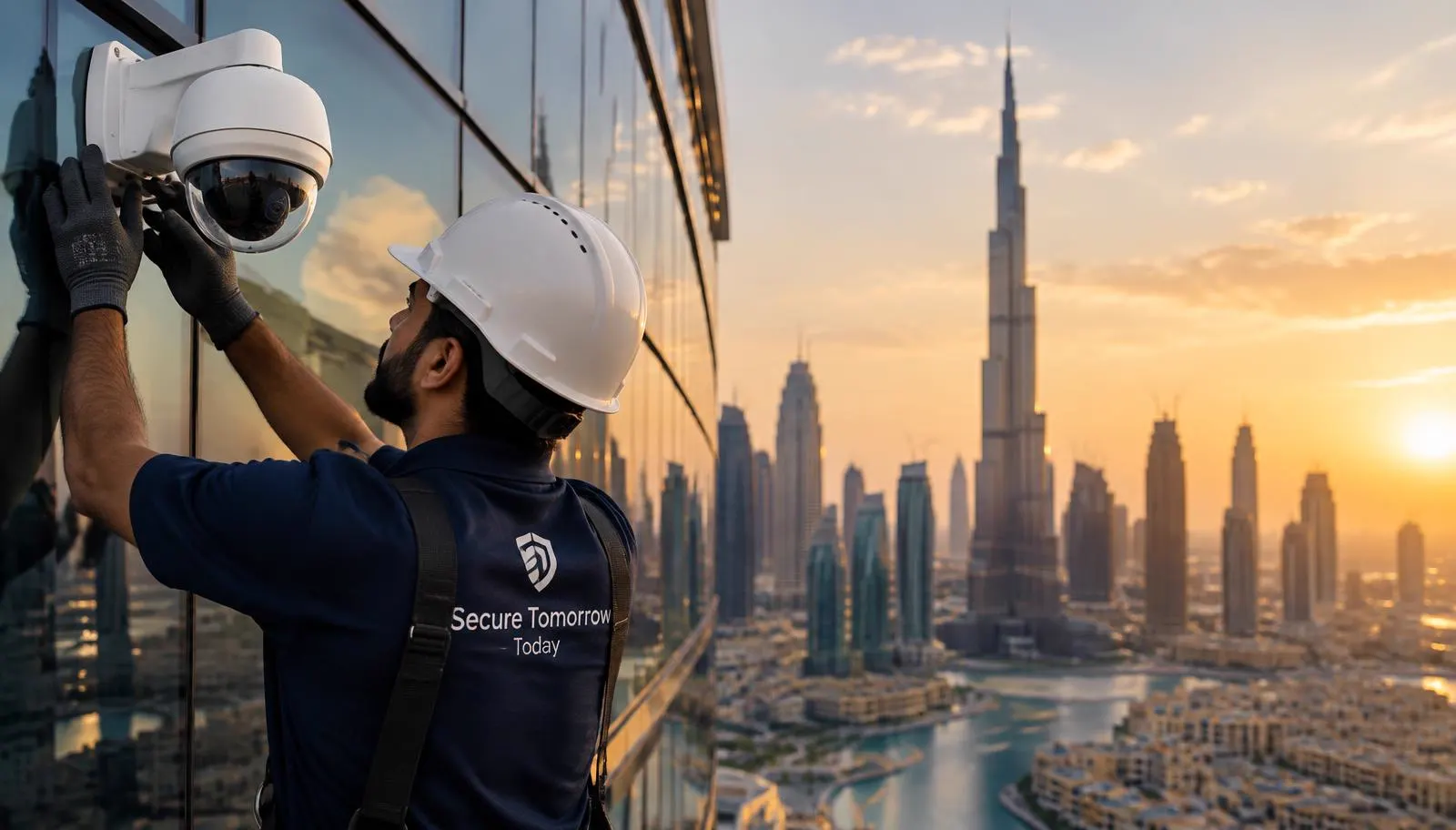
Secure the opening without disrupting movement
Door access control manages entry at a defined doorway using authorised credentials and suitable locking hardware. Unlike a broader access-management project, a door-focused installation starts with the physical opening: its material, frame, closing action and daily use. A reader cannot compensate for a damaged door or unsuitable lock. The design should establish how authorised users enter, how occupants exit and how the opening behaves under abnormal conditions.
Dubai offices, staff rooms, stockrooms and shared commercial premises may need controlled doors for different reasons. Some want to prevent casual entry; others need restricted access to sensitive areas or an auditable record of selected events. The installation should match that purpose without adding unnecessary complexity. Visitor release, deliveries and cleaning access should be considered so that normal operations do not encourage users to prop the door open.
Choose hardware to suit the actual door
Electromagnetic locks, electric strikes and other locking arrangements have different applications and installation requirements. Suitability depends on the door construction, frame, latch arrangement, fire rating where relevant and required safety behaviour. Glass doors, aluminium shopfronts and solid timber doors may need different brackets or preparation. Any modification to a rated or specialist door should be coordinated with the responsible parties rather than improvised on site.
Reader options may include cards, fobs, PINs, mobile credentials or selected biometric methods. Hikvision, Dahua, Axis, Bosch and other specialist products may be relevant, but exact controller, reader and lock compatibility must be checked. Existing credentials should be tested before reuse is promised. Product popularity does not establish approval or suitability, and a complete proposal should identify power supplies, exit devices and monitoring accessories rather than list only the reader.
Exit, emergency release and everyday reliability
The required exit and emergency arrangements should be established with the relevant building and life-safety responsibilities in mind. Security objectives must not obstruct required escape. Depending on the door and applicable design, the system may need particular release devices or coordination with other systems. The correct arrangement cannot be chosen solely from a generic diagram; it needs to reflect the opening's purpose and the confirmed requirements.
Door closers, alignment and mechanical condition are central to reliability. A door that fails to close consistently can defeat the access system or create repeated alarms. High-traffic entrances may need more robust hardware and closer attention to user movement. Power-loss behaviour and backup arrangements should be specified explicitly. Users should understand what to do if the reader fails, the door remains unlocked or the opening does not release as intended.
Dubai exposure, data and SIRA checks
External readers and locks may face heat, dust, humidity and direct sunlight. Equipment should be rated for the installed conditions, including sheltered outdoor spaces that still experience moisture or high temperatures. Exposed keypads can become uncomfortable to use, and biometric readers may be sensitive to placement. Cable entries, corrosion-resistant fixings where appropriate and protected power equipment help reduce avoidable failures at entrances and service doors.
SIRA relevance should be verified for the premises, licensed activity and door-security scope. A controlled office door does not automatically follow the same approval route as every other installation. Landlord consent and fire-safety coordination may be separate requirements. Access-event records also need appropriate permissions and retention decisions. Where biometric credentials are used, the client should assess the associated privacy obligations rather than treating enrolment as a purely technical step.
Survey, fitting and functional testing
The survey should document the door type, dimensions, frame condition, available power and practical cable routes. It should also identify whether the existing handle, latch or closer needs attention. The client should approve credential methods, administrator responsibilities and any visitor-release function before installation. Work in an occupied office may need scheduling around reception operations or temporary security arrangements while the door hardware is being changed.
Testing should cover valid and invalid credentials, normal exit, door closing, scheduled permissions and the agreed power-loss or emergency-release behaviour. Where door monitoring is included, held-open and forced-open events should be checked. Handover should explain daily operation, lost-credential handling and fault reporting. The client should receive relevant equipment information and know which adjustments require the access-control installer and which require a competent door or building-system specialist.
Timing, price factors and future changes
Installation time depends on door preparation, hardware availability, cable concealment, access restrictions and any required coordination with building systems. A straightforward surface-mounted arrangement differs from work on a specialist glass or rated door. The programme should identify these dependencies before promising a completion date. Additional permissions or remedial mechanical work can affect sequencing even when the electronic equipment is readily available.
Cost factors include the opening type, lock arrangement, credential technology, controller, power backup, cabling, door repairs and integration requirements. A quotation should show whether licences, user enrolment and training are included. Future changes also matter: an expandable controller may suit planned additional doors, while a simple standalone system may meet a limited requirement. The choice should follow the client's actual plans, not an assumption that larger is always better.
What's included
- Door survey
- Credential options
- Exit safety review
- User handover
How we work
Our 6-step process
- 1
Free consultation
- 2
Site survey
- 3
SIRA-compliant design
- 4
Transparent quotation
- 5
Professional installation
- 6
Handover & support
FAQ
Frequently asked questions
Can access control be fitted to a glass door?
Often, but the glass, frame and available mounting surfaces need assessment. Suitable brackets and locking arrangements vary, and specialist door restrictions may apply. The installer should confirm compatibility before drilling or modifying anything, particularly where the opening has a fire rating or manufacturer conditions.
Will the door unlock during a power failure?
That depends on the selected locking arrangement, backup power and required safety design. The intended behaviour must be established for the specific door and tested. Neither a magnetic lock nor a battery should be used as a shortcut for deciding the complete emergency and power-loss arrangement.
Can staff exit without presenting a card?
The exit method should follow the door's function and applicable safety requirements. Some arrangements allow normal mechanical exit; others use suitable release devices. The correct method needs a site-specific design, and security preferences must not override required escape provisions or approved building arrangements.
Can our receptionist release the door remotely?
Yes, where the design includes a suitable release button, intercom or software function. The proposal should specify how visitors are identified and who may operate the release. Remote unlocking should be limited to authorised users and tested alongside the door's normal locking and closing behaviour.
Do we need a full access-control server for one door?
Not necessarily. A standalone or smaller managed system may be sufficient, depending on reporting, user administration and future expansion needs. The comparison should consider operational convenience and lifecycle support, not just initial hardware. A simple system still needs secure administration and documented credential management.
Why does the door sometimes remain open after valid access?
Possible causes include closer adjustment, frame misalignment, latch problems or users holding the door. Electronic timing may also contribute. The fault should be assessed mechanically and electrically rather than assuming the reader is defective. Reliable closing is essential for the access restriction to be effective.
Request a site survey in Dubai
Ready to secure your Dubai property?
Free site survey anywhere in Dubai. Response within one hour.