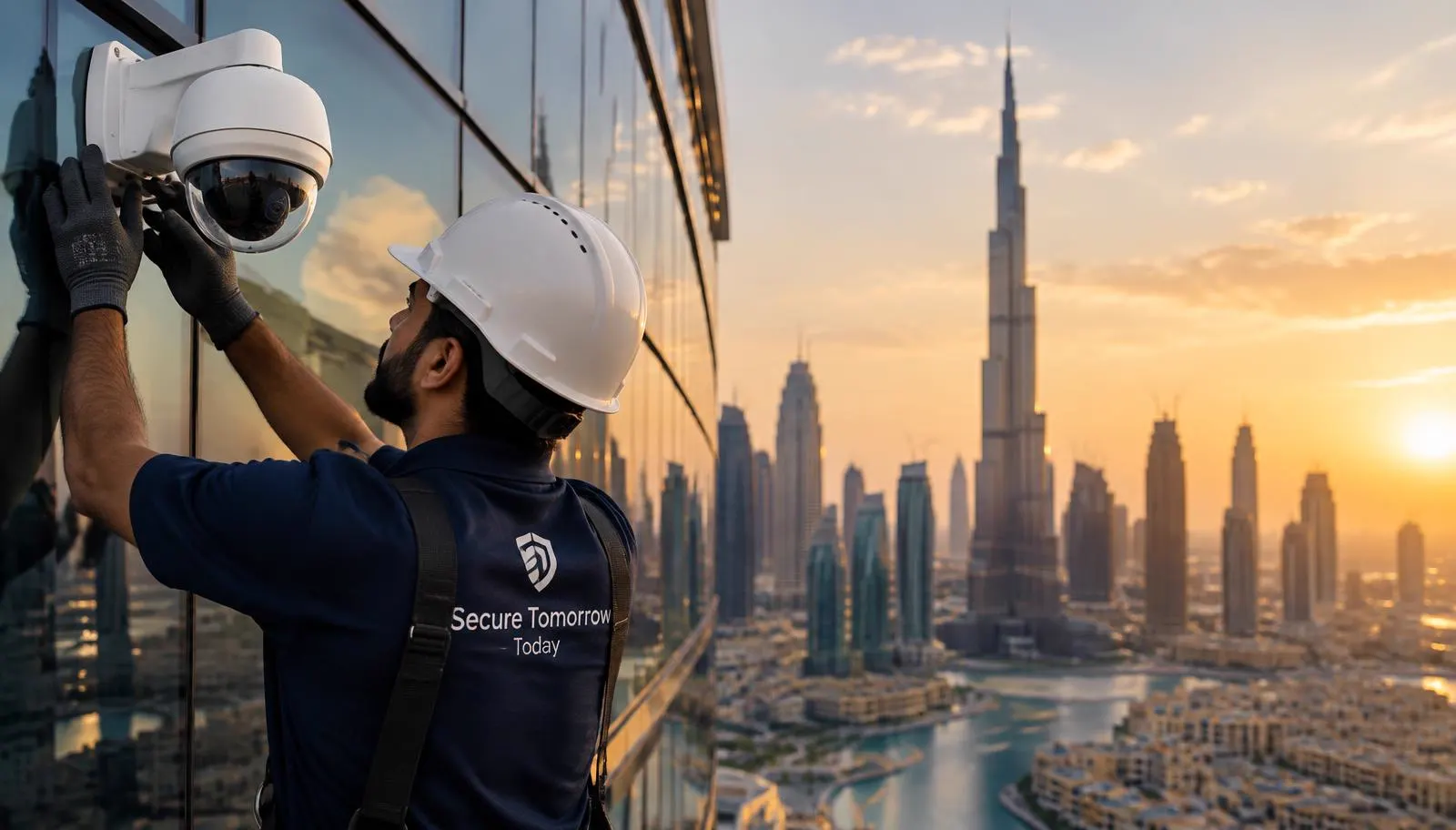
Separate a voluntary home-security project from a requirement linked to a particular property use. A family residence, a commercially operated property and accommodation managed under another activity may raise different questions. [VERIFY] Confirm any applicable licence details and security approval obligations for the villa's actual use with the relevant authority or qualified provider. Community management may also impose conditions on external equipment or alterations. Request those conditions in writing where possible. An installer should be able to explain which part of a recommendation is a legal requirement, which is a community condition and which is simply good security practice.
Build the camera plan around access routes rather than the number of rooms. For many villas, useful starting points are the pedestrian gate, vehicle entrance, main door, side passage and accessible rear boundary. Each location needs a clear purpose. A front overview can show the sequence of an arrival, while a closer entrance view may provide more useful detail. Consider how family members, visitors, delivery staff and maintenance workers actually move around the property. Cameras that duplicate an attractive front elevation may contribute less than a carefully placed view of an otherwise unobserved side entrance.
Privacy should influence the first drawing, not become a correction after installation. Aim cameras towards the owner's property and avoid unnecessary views into neighbouring homes, gardens or private windows. Use physical positioning first and privacy masking where suitable. Avoid installing cameras in bathrooms, changing areas or other locations where people reasonably expect strong privacy. Indoor monitoring also deserves a proportionate discussion with household members and relevant workers. Audio should not be enabled casually just because a camera supports it. Obtain advice on the applicable privacy rules before introducing recording features that are not needed for the security objective.
Inspect the villa under different lighting conditions. A camera beside a decorative wall light can suffer glare, while a dark side passage may require a different lens or carefully planned illumination. Infrared light can reflect from nearby walls, deep eaves, glass and glossy surfaces. Landscaping also changes the scene: growing branches can block a gate view or trigger unnecessary alerts. Ask for sample views from the intended mounting positions, especially where a vehicle canopy or boundary wall constrains the angle. A specification based only on daytime photographs may miss the period when the household most needs dependable images.
Choose cable routes that respect the building and remain serviceable. Exterior cabling should be protected appropriately, with weather-exposed connections enclosed and penetrations finished properly. A neat surface route may be preferable to an inaccessible concealed route if future repairs would damage expensive finishes. Discuss access to roof spaces and the effect of waterproofing warranties before drilling. Wireless cameras can be useful in selected circumstances, but signal coverage, power availability and ongoing recording reliability still need assessment. A product described as wireless does not remove the need to plan how it receives power or maintains a stable connection.
Place the recorder and supporting network equipment somewhere secure, ventilated and accessible to authorised maintenance personnel. Avoid treating a hot external cabinet as an ordinary indoor equipment location. Consider what happens if household internet service fails: local recording and remote viewing are separate functions and should be tested separately. Where backup power is proposed, ask what equipment it supports and what operating conditions the estimate assumes. [VERIFY] Confirm whether any specific footage retention obligation applies to the property's use. If not, choose a proportionate recording period based on security needs, storage performance and privacy rather than copying a commercial premises figure.
Remote access should remain under the homeowner's control. Create individual accounts where the system supports them, use strong unique credentials and enable additional authentication where available. Decide whether a property manager needs access and whether that access should expire when a tenancy or management agreement ends. Ask how installer access will be removed or restricted after commissioning. Record the recovery process and keep it somewhere secure. When the owner changes phones, replaces the router or changes internet provider, the CCTV system should not become dependent on an undocumented technician account that nobody in the household can recover.
Acceptance testing should include ordinary household situations. Ask someone to enter through the pedestrian gate, park beneath the canopy and walk along the side passage after dark. Review the recorded footage and confirm that it answers the questions the family cares about. Test playback on the owner's actual phone without relying solely on the installer's device. Check notification settings so that routine movement does not create an unmanageable stream of alerts. If household staff need a simple operating guide, provide one that explains fault reporting and basic playback without sharing administrative permissions unnecessarily across every user.
Keep the system useful after installation by reviewing landscaping, boundary changes and external lighting. A new pergola can obstruct an existing view, and a replacement router can interrupt remote access without stopping local recording. Arrange maintenance according to the equipment's environment and the household's ability to identify faults. When requesting a villa quotation in Jumeirah or elsewhere in Dubai, ask for a privacy-conscious layout, clear responsibilities and a written statement of any approval assumptions. The strongest proposal explains what the home needs and what must be verified, rather than using an unsupported claim that all villas face identical SIRA obligations.
Need help? See our cctv installation service or book cctv installation jumeirah.